Key points
- TEPPUN. takes Kutani ware that was rejected because of tiny iron spots and finishes each piece with an auspicious swallow motif arranged around those spots. Every piece is one of a kind
- Prices are 2,000 to 10,000 yen (excluding tax), depending on size and shape. Pieces range from small plates about 10 cm across to large plates about 30 cm, in two colors: tetsukon (blue) and sabi (brown)
- TEPPUN. has no permanent shop. It sells only through occasional pop-up shops and its online shop, which is scheduled to open at 10:00 a.m. Japan time on Monday, November 16, 2026 (shipping is charged separately, from 1,000 yen)
- The first pop-up shop ran from November 8 to 15, 2026 in Komatsu, Ishikawa. A second pop-up is planned for around January 2027
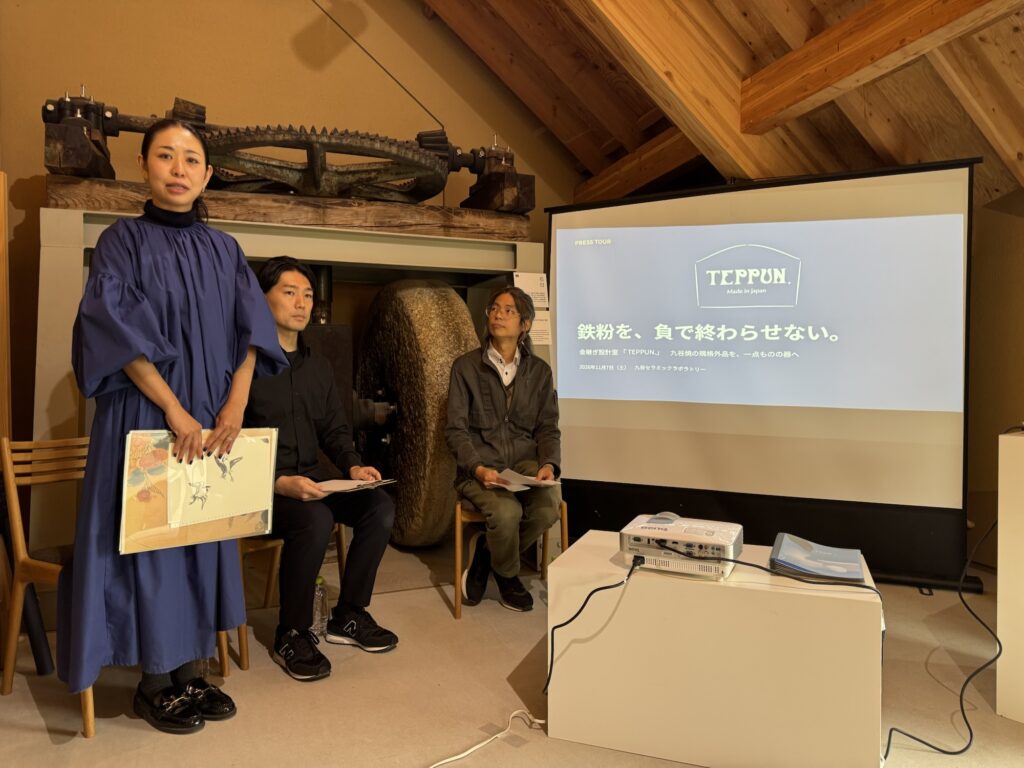
This article is based on our interviews with Kintsugi Sekkeishitsu and Miyayoshi Seito on November 7, 2026, and on the venue's official website as of October 2026. Quotes were translated from Japanese by our editors.
TEPPUN. is an upcycling brand from Komatsu, Ishikawa Prefecture. In Kutani ware, small dots called teppun (iron spots) appear by chance during firing, and pieces that carry them have been discarded as rejects. TEPPUN. decorates those pieces with auspicious motifs and turns each one into a one-of-a-kind vessel. The brand is run by Kintsugi Sekkeishitsu (金継ぎ設計室), an art unit of a kintsugi artist and an architect.
Contents
- What is TEPPUN.? Rejected Kutani ware remade as one-of-a-kind pieces
- Why an iron spot makes a Kutani ware piece a reject
- The design: a swallow motif in tetsukon blue and sabi brown
- Inside Miyayoshi Seito, the pottery behind TEPPUN.
- Trying the design workshop with an iron-spotted plate
- Where to buy TEPPUN.: the online shop and pop-up shops
- CERABO KUTANI, the venue of the first pop-up
What is TEPPUN.? Rejected Kutani ware remade as one-of-a-kind pieces
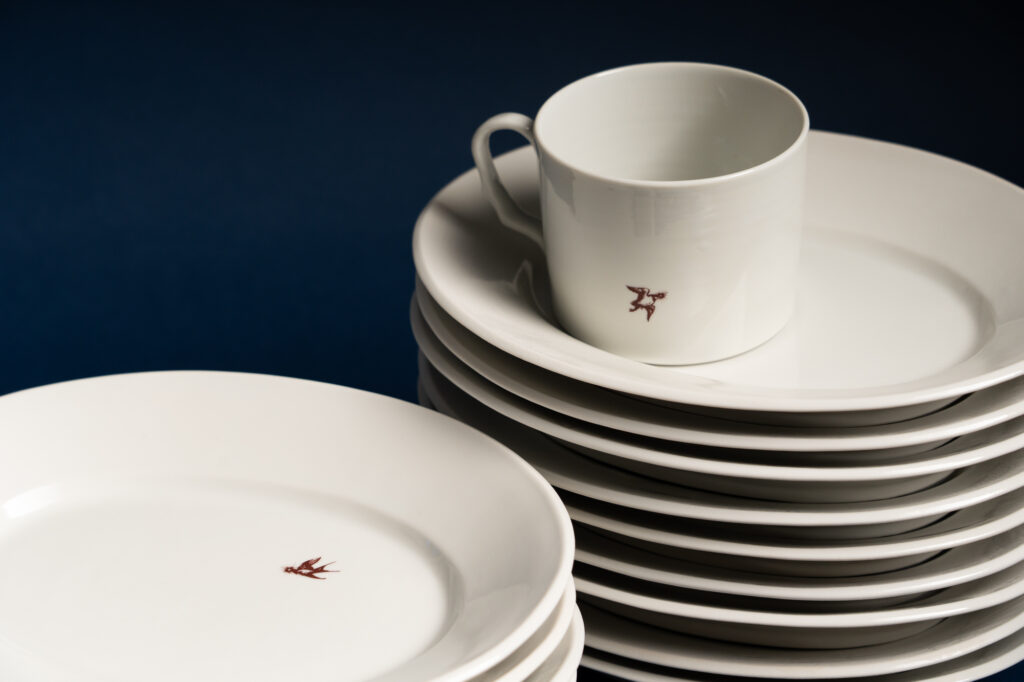
TEPPUN. was started by Kintsugi Sekkeishitsu, an art unit formed by kintsugi artist Nakaoka Yoko and architect Asai Kohei. Kintsugi is the Japanese craft of repairing broken ceramics with lacquer and gold. Guided by the spirit of kintsugi, which does not deny the "scars" of an object but cherishes its history and background, the two have worked on "restoration as art" in Komatsu since 2024. They repair damaged vessels, run kintsugi and maki-e (gold lacquer decoration) workshops, and plan and build exhibitions at Kutani ware facilities. They also redesign and sell vessels that would otherwise be thrown away as rejects.
The brand concept is "turning the iron spot born from chance into a one-and-only lucky charm." It began when Nakaoka, while working under Japan's local revitalization program (chiiki okoshi kyoryokutai), visited a pottery and saw a pile of vessels waiting to be discarded. TEPPUN. works mainly with Miyayoshi Seito (宮吉製陶), a pottery in Komatsu, and buys the vessels that never reached the market because of iron spots. A company in Nomi City, 山近スクリーン, is also named as a partner.
TEPPUN. grows out of a wish to preserve history and stories
Asai KoheiArchitect
Why are two people in different professions doing this? Because we are deeply interested in the history and stories that live in old objects and buildings, and we work out of a wish to preserve them. The TEPPUN. brand is an extension of that.
What was the hardest part of turning this into a brand?

Nakaoka YokoKintsugi artist
Iron spots are, if anything, a taboo in the industry. Putting the word out so prominently as a brand name was itself something I was nervous about, wondering how strong the headwind would be. To be honest, we started quietly.
Why an iron spot makes a Kutani ware piece a reject
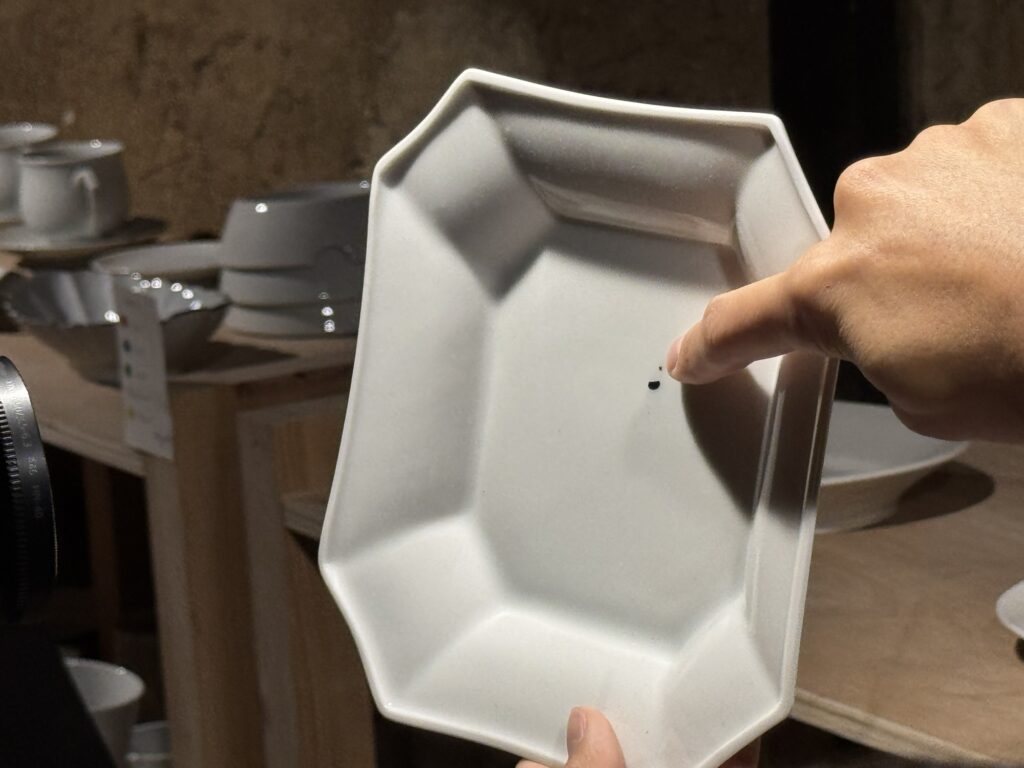
During the firing of Kutani ware, "iron-spot moles" of many colors, shapes and sizes, such as brown, black and navy, appear by chance. According to Chen-Miyayoshi Wei of Miyayoshi Seito, people in the pottery trade call an iron spot a "mole" and a small round pinhole a "dimple" in everyday talk. The spots form when iron powder floating inside the kiln settles on a piece, or when iron particles kneaded into the clay come to the surface. No two pieces carry the same marks.
Cracks and warping also make a piece a reject, but iron spots are a slightly different case. Unlike a cracked or warped piece, a piece with an iron spot is classed as a reject even though its form is perfectly usable. In the normal production process, a single small dot is enough for a piece to be removed.
Why is a usable piece taken out?

Chen-Miyayoshi WeiRepresentative Director and Vice President, Miyayoshi Seito
With freehand painting you can hide a black dot as much as you like. But when you apply a pattern in the same place using transfer paper, mass-produced pieces in runs of 100, 200 or 300 all get the same design. That means there are areas where you apply the pattern and areas where you don't. Applying a lot raises the cost, so you apply it as a single accent. Then the question is what to do when an iron spot appears where there is no pattern, and it ends up being rejected because it looks bad.
There is nothing wrong with the quality of a piece that has an iron spot. What remains is how we humans can live with it.
Kutani ware has in fact lived with iron spots from the start. According to Chen-Miyayoshi, the body made from the pottery stone used for Kutani ware contains many iron spots, and the Kutani style of painting the whole piece with pigments developed out of efforts to hide that body. He says the fine dots painted on Yoshidaya ware of the revived Kutani period are also "a way of making use of iron spots." However, partly because iron spots have not been talked about within the industry, no detailed records remain, and he notes that there are various theories. Setting TEPPUN. against this history, Chen-Miyayoshi said, "This too is the result of people wringing out their wisdom, so I am very happy."
Miyayoshi Seito is a pottery whose craftspeople pursue high quality, aiming for a body that shows delicate painting at its best. According to Kintsugi Sekkeishitsu, behind that work, vessels rejected for iron spots, cracks or warping fill twelve 2-cubic-meter containers a year for disposal, and many more are stored away without ever being seen. That volume amounts to 10 to 20 percent of production, and disposal costs come to about 750,000 yen a year. According to Chen-Miyayoshi, rejected pieces contain glass components and can only go to landfill, and because they cannot go to ordinary landfill, the pottery pays a contractor to take them away.
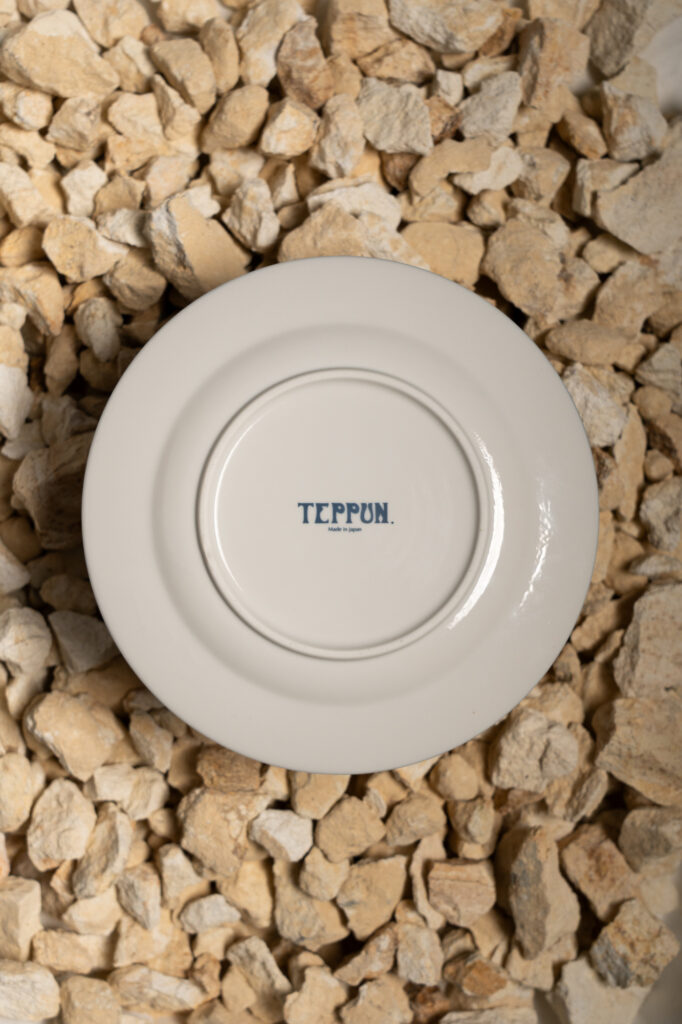
Behind this are changes in painting styles in recent years, and quality standards that have risen as clay-refining technology has improved. Iron spots that were once seen as part of a piece's character came to be classed as rejects.
The strictness that allows not even a small dot rests on the work of Kutani craftspeople who have honed their skills and raised the quality of Kutani ware as a whole. At the same time, the makers say, the cost of disposing of rejects weighs on the pottery's finances, and there are concerns about the environmental burden and the loss of limited pottery clay resources.
Nakaoka came to work with Miyayoshi Seito after meeting Chen-Miyayoshi through the local revitalization program and finding that they shared the same concern.
Nakaoka YokoKintsugi artist
Each piece is made with such care, and yet they are returned in large numbers for the smallest things, like an iron spot or a drip of glaze. I had watched the vice president lament that for a long time, so that side of it (the high quality control of Kutani ware and what lies behind it) is what stayed with me.
The many kinds of iron spots born at the pottery came to feel like "an endearing character of the vessel," and TEPPUN. emerged after six years of trial and error. The two describe the project less as raising an issue about the production region and more as "an activity in which two artists found character in iron spots that had been overlooked."
The design: a swallow motif in tetsukon blue and sabi brown
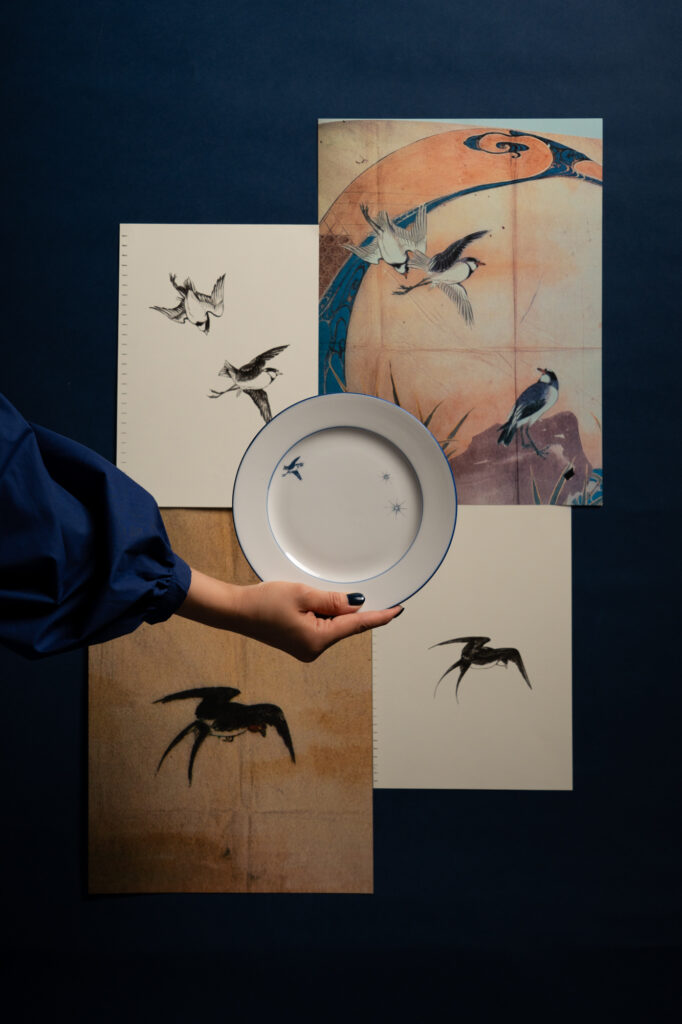
TEPPUN. does not hide the iron spots. It treats them as character and lays out auspicious motifs to follow the way the spots appear, so that they become part of the pattern. Because no two iron spots are the same, every finished piece is one of a kind.
The motifs were designed by hand in pen by Nakaoka, drawing on experience in maki-e and based on illustrations of old Kutani ware. The first motif chosen was the swallow, regarded as a symbol of prosperity. The makers say they chose it "with the wish that it will carry happiness to the person who picks up the vessel."
The patterns are made into transfer sheets and applied to the vessels. The sheets are produced by a screen-printing studio in Nomi City that specializes in transfers. Each sheet carries several designs of different shapes, such as a swallow's eye, a berry it has pecked and the center of a star, which are combined to suit where the iron spots fall.
How much work goes into a single piece?
Asai KoheiArchitect
Applying the transfer sheet itself does not take much time. But when a plate has many iron spots, you first have to think about what design to apply. You look at where the spots are, work out the design yourself and then apply it, so one piece has sometimes taken about 30 minutes. The more iron spots there are, the more complex the design becomes, so it feels less like mass production and more like finishing one work, like making an art piece.
Nakaoka YokoKintsugi artist
Until now, transfers were called "transfer ware" in the industry and were seen as something easy compared with hand painting. But depending on how you use them, they can become art pieces. I think this is also a change in thinking.
The pieces come in two colors, tetsukon (blue) and sabi (brown), and the makers plan to add colors and patterns to match the seasons. Sizes range from small plates about 10 cm in diameter to large plates about 30 cm. Prices are 2,000 to 10,000 yen (excluding tax) and vary with size and shape.
Who would you like to use them, and how?
Nakaoka YokoKintsugi artist
You serve a meal on it, and as you finish eating the swallow gradually comes into view, and you think, "Something good might happen." You might use it as your own lucky point, or serve a friend a drink in a cup, and when they finish the swallow appears, "Something good will happen," and it leaves a happy feeling. Not buying it out of kindness because it is a B-grade piece, but seeing the swallow as if it were pecking at the iron spot. I hope it is used by people who can enjoy that kind of story.
Chen-Miyayoshi WeiRepresentative Director and Vice President, Miyayoshi Seito
We specialize in tableware, but I think it is fine to use the pieces as interior items. About three years ago a student from Komatsu University came and bought a plate. When I asked what it was for, the answer was, "I will put it in the entrance hall and keep my car key and earrings on it." I thought that was stylish.
Inside Miyayoshi Seito, the pottery behind TEPPUN.
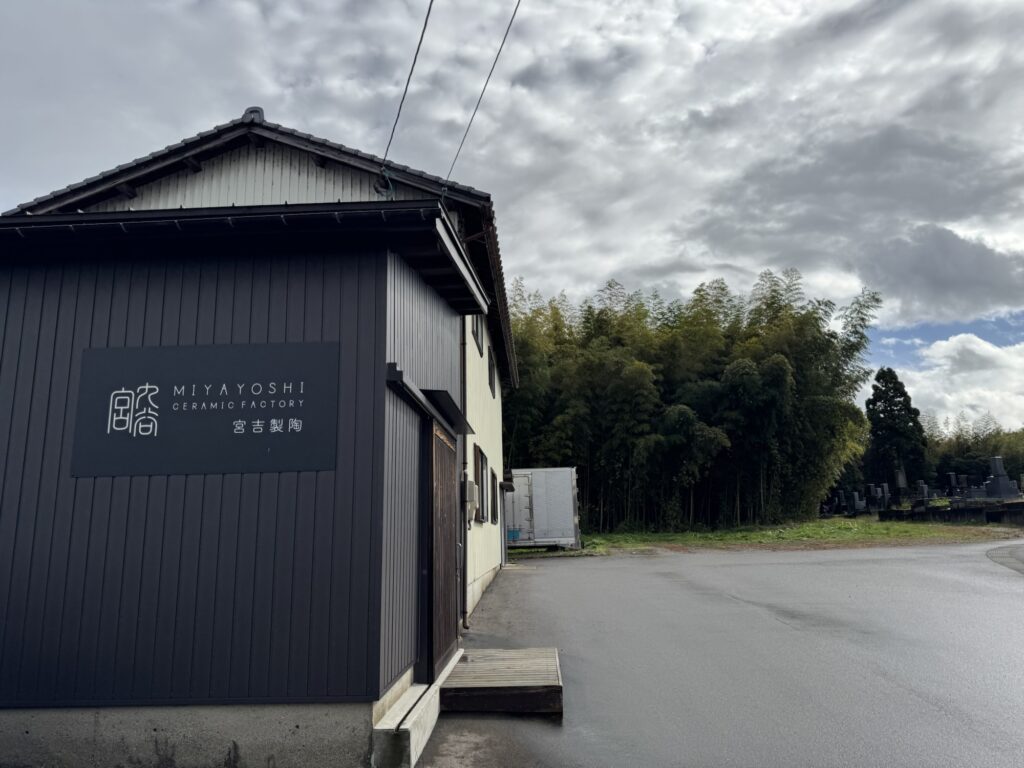
On November 7, 2026, our editors toured Miyayoshi Seito in Komatsu, where TEPPUN. sources its vessels, guided by Chen-Miyayoshi. In the room for machine forming, a roller machine shapes a cup from clay in a mold in about three seconds. But the rim, where the excess clay is cut away, is rough and sharp, so a craftsperson dips a special sponge in hot water and smooths each one by hand.
Chen-Miyayoshi WeiRepresentative Director and Vice President, Miyayoshi Seito
Seto ware and the like can be made in one go by machine, but we do not have that kind of equipment, so from here the pieces go into the hands of our craftspeople. People tend to think machine forming is 100 percent machine, but in reality it is 30 percent machine and 70 percent human hands.
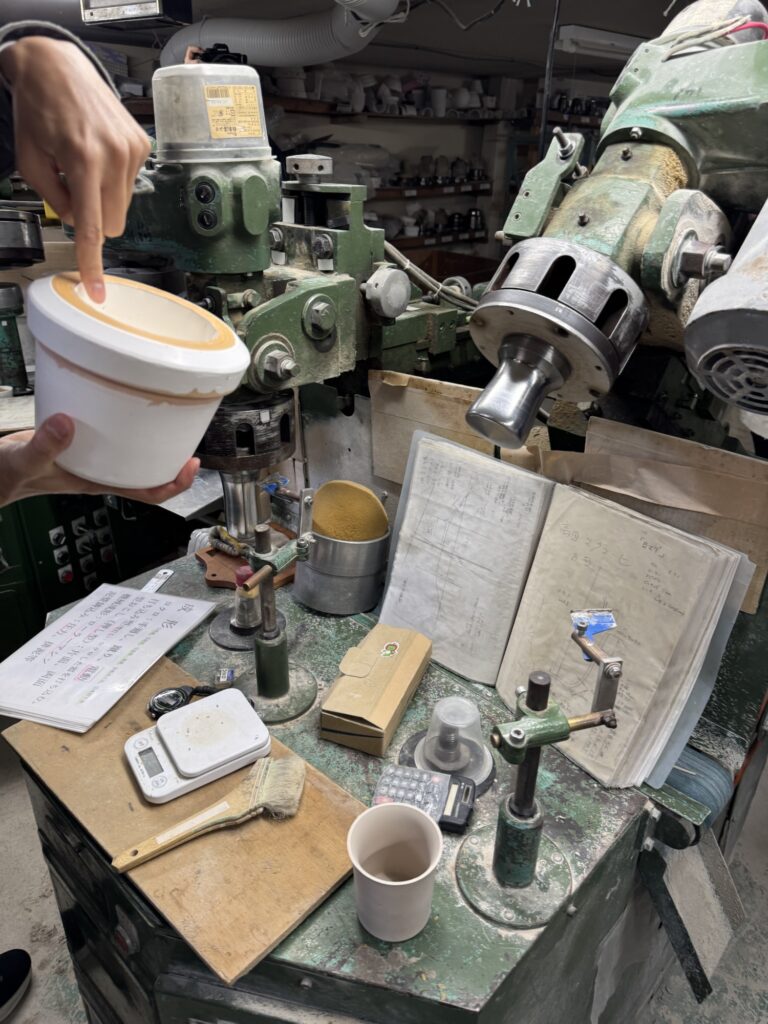
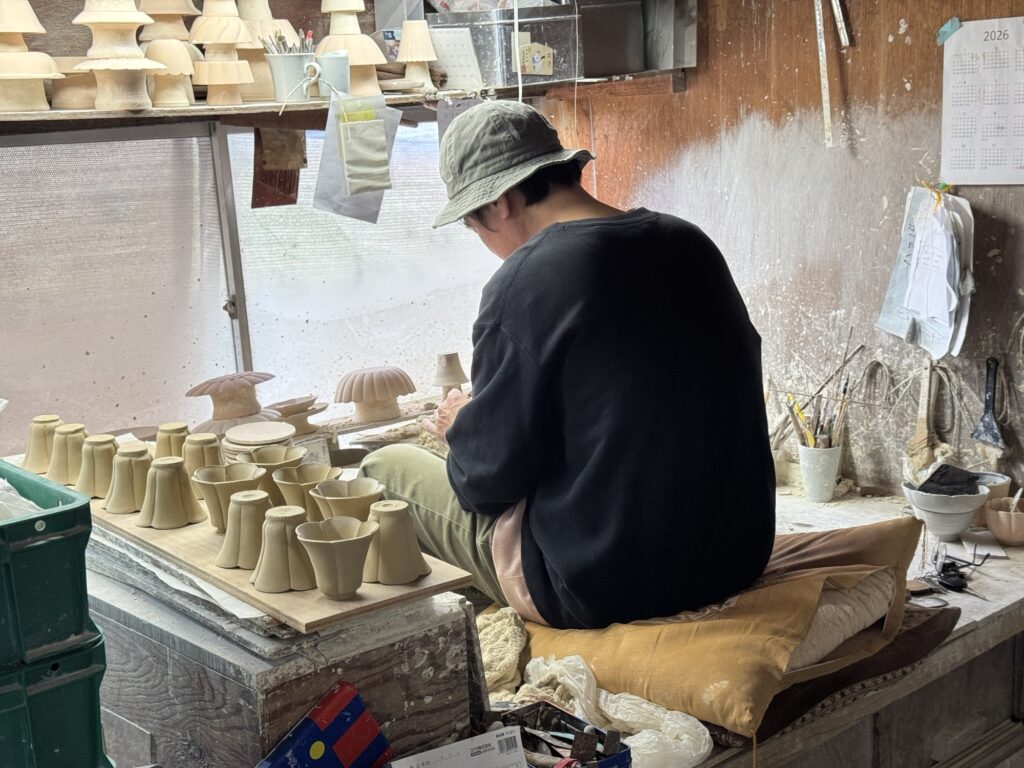
In the wheel-throwing room, we were allowed to handle vessels of a thinness that is said to be possible only through a craftsperson's skill. Hand-made vessels use 100 percent Hanasaka pottery stone, while mass-produced pieces blend Hanasaka stone with other white clays. The distinction is meant to make the limited stone last, and according to Chen-Miyayoshi, the Hanasaka stone deposit is "said to last only another 80 to 100 years."
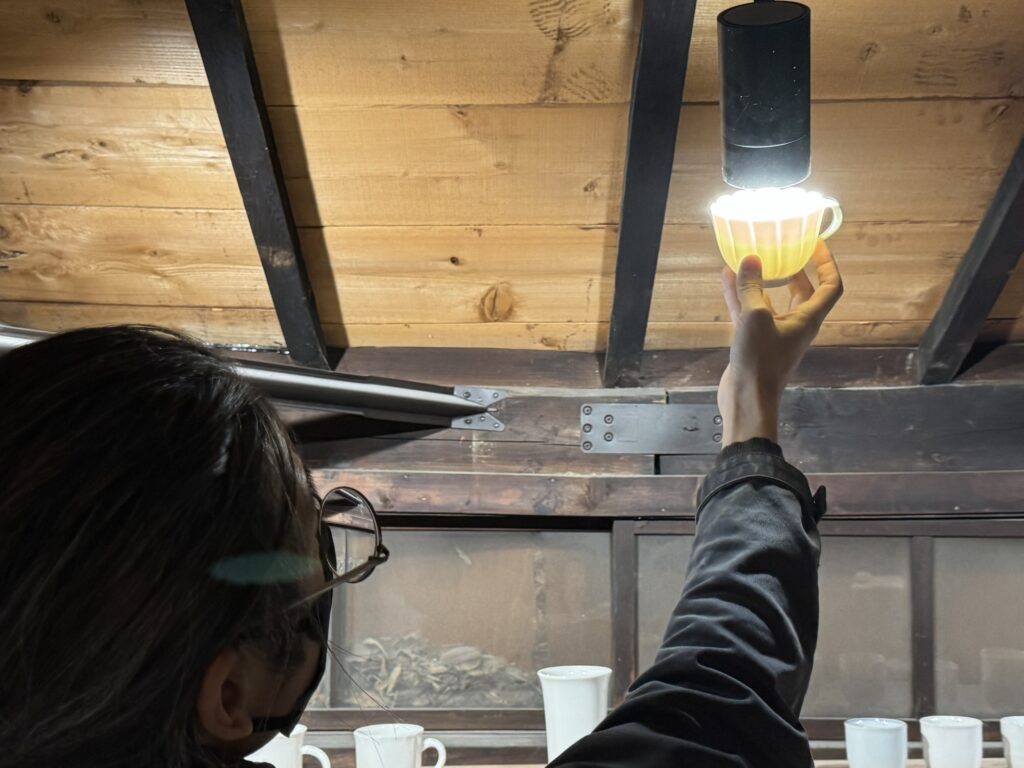
Formed vessels are bisque-fired once, glazed, and then fired in the main kiln for 12 to 13 hours per firing. Loading the kiln is "a world of 0.5 millimeters, 0.1 millimeters."
Chen-Miyayoshi WeiRepresentative Director and Vice President, Miyayoshi Seito
Even the plain white body of a single chopstick rest goes through this many steps. There is no way we would not love it.
At the launch event, Chen-Miyayoshi also described pieces with iron spots and B-grade pieces as "things we made, our children."
Trying the design workshop with an iron-spotted plate
On the same day we also joined a design workshop using vessels with iron spots. As with TEPPUN. pieces, participants apply transfer-sheet patterns to a vessel to suit the position of its iron spots. The workshop was part of "KUTANI BASE vol.12 'kutani kutani kutani'," an event for enjoying Kutani ware with free ideas, held the same day, and we took part alongside members of the public.
- Choose a vessel
The workshop begins with choosing the vessel you want to decorate. We used a small plate, but larger vessels can also be chosen.
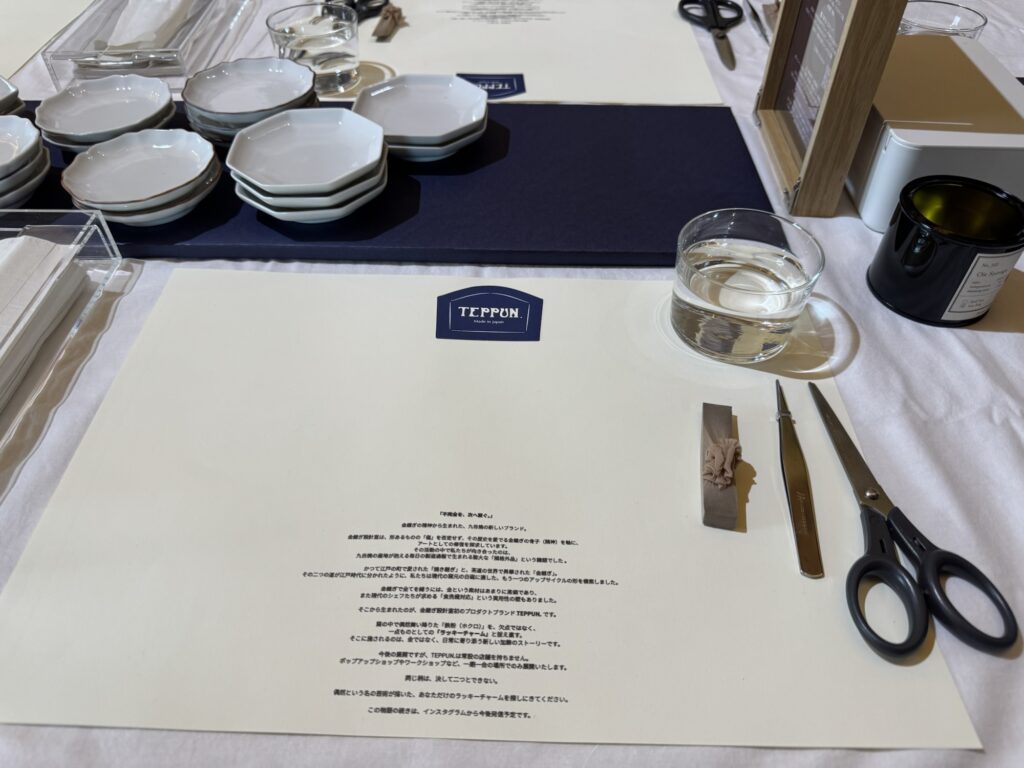
- Choose the patterns
Next, choose the patterns to transfer. The colors were red and blue, and the motifs come in various sizes.
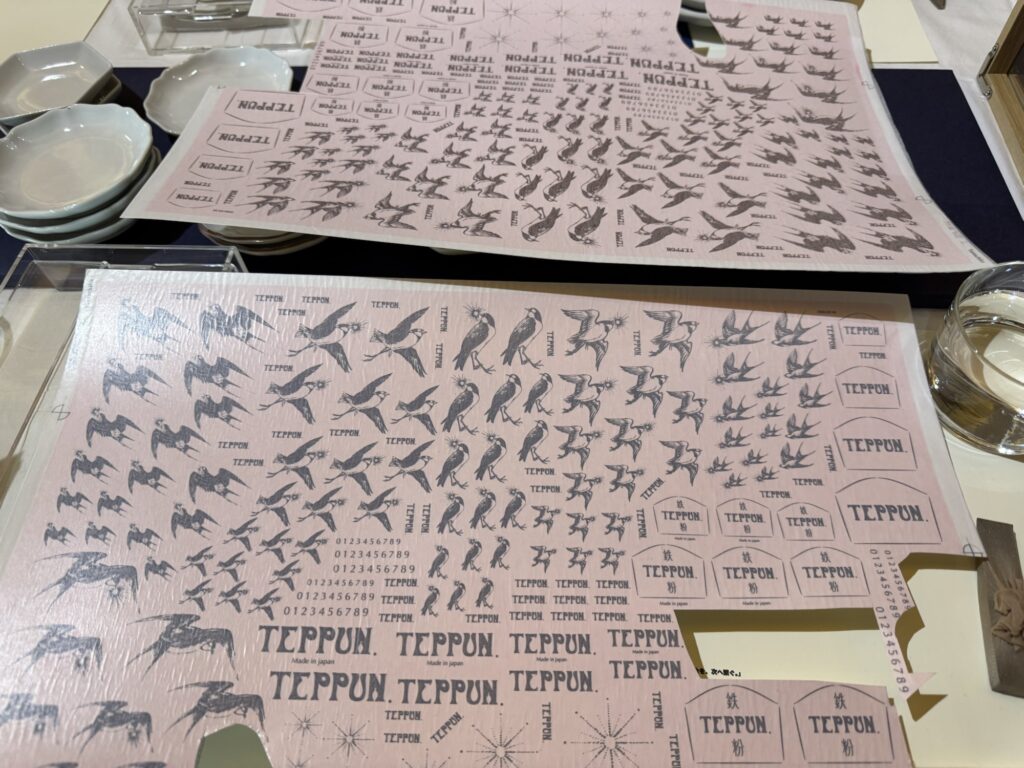
- Cut out the pattern
We chose a large swallow and cut along its outline.
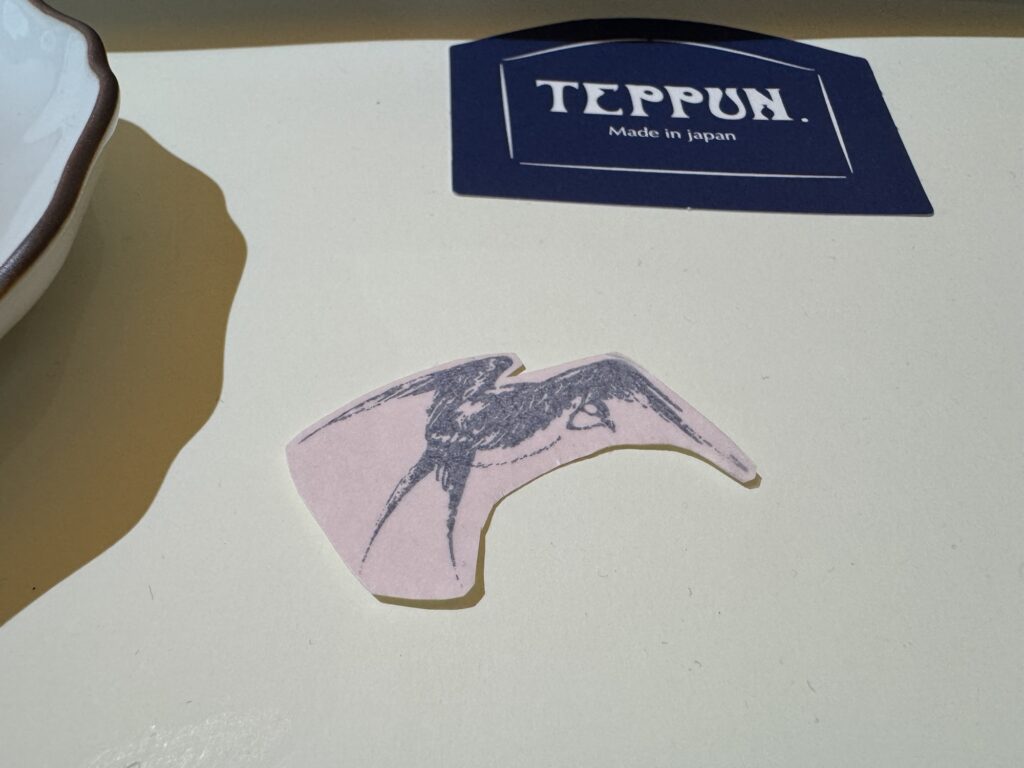
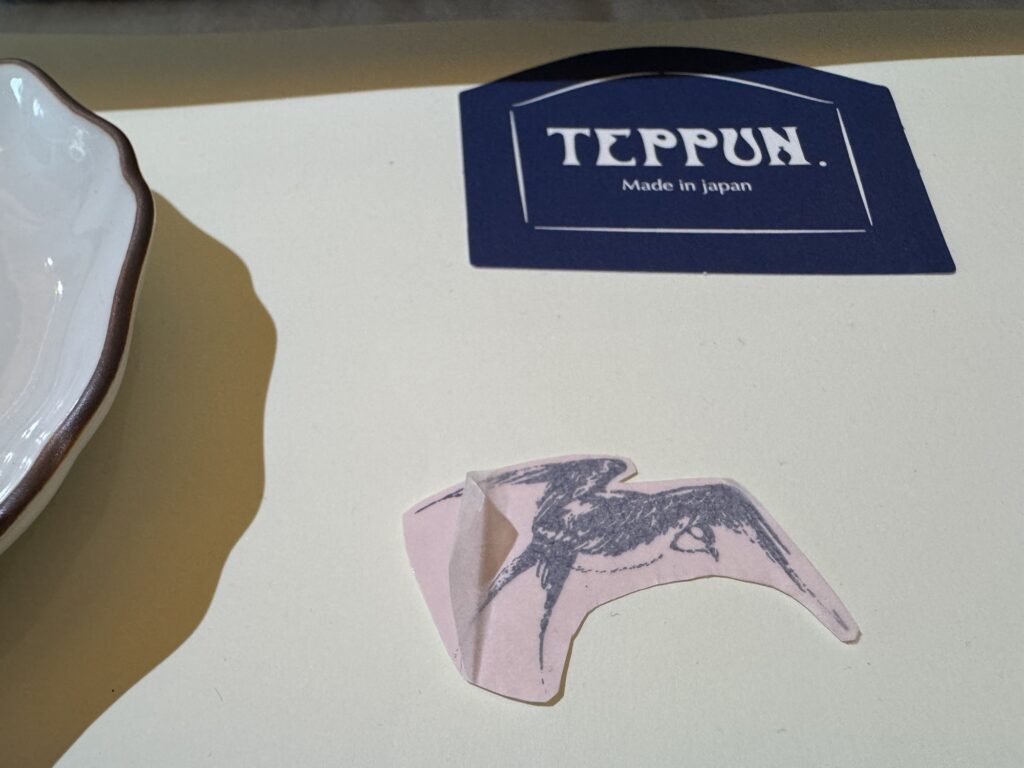
- Peel off the protective film
Once the pattern is cut out, peel the protective film from its surface.
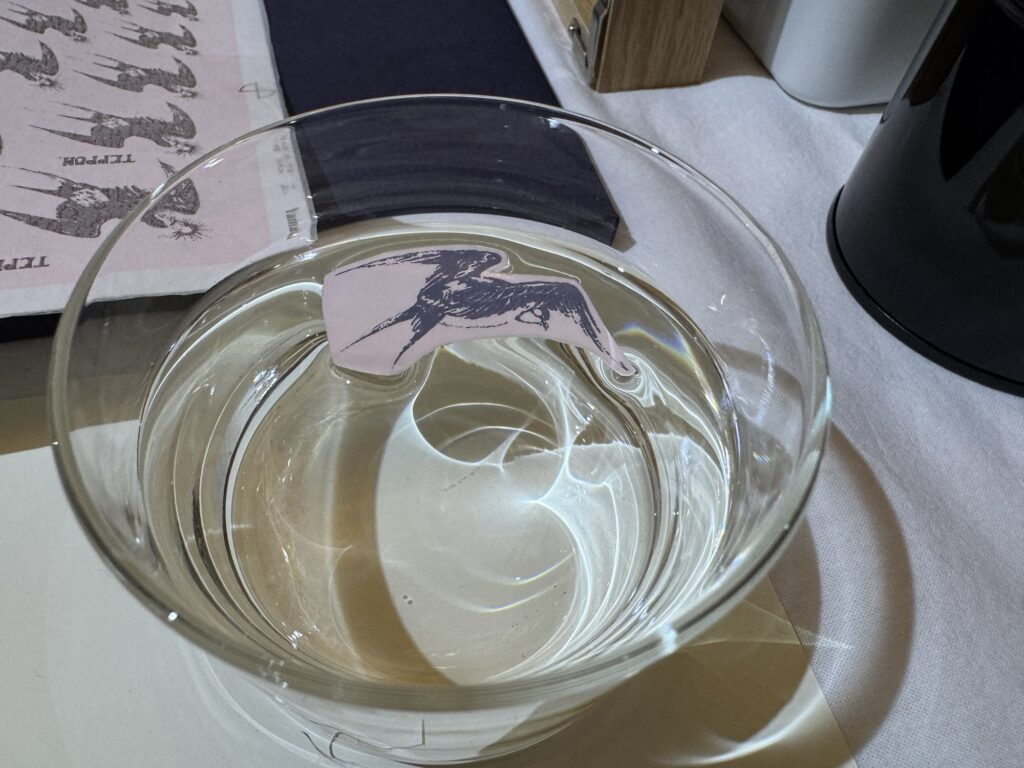
- Soak it in water
After peeling the film, place the pattern in water.
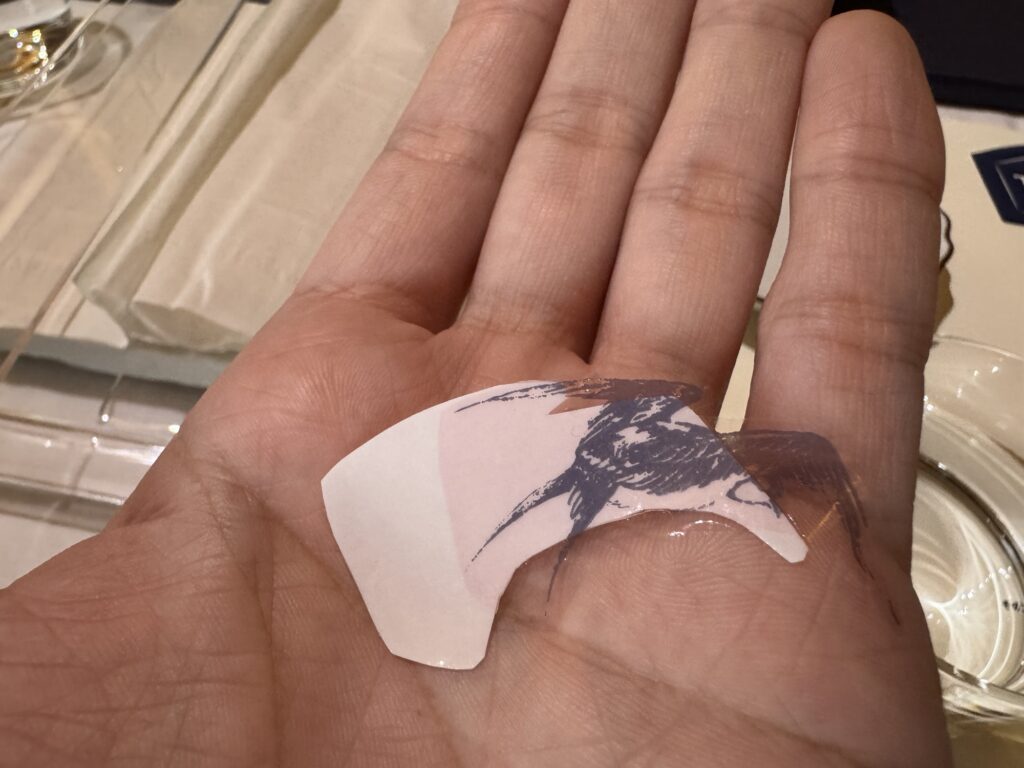
- Slide it off the backing
After soaking for a while, the transfer comes away from its backing paper easily.
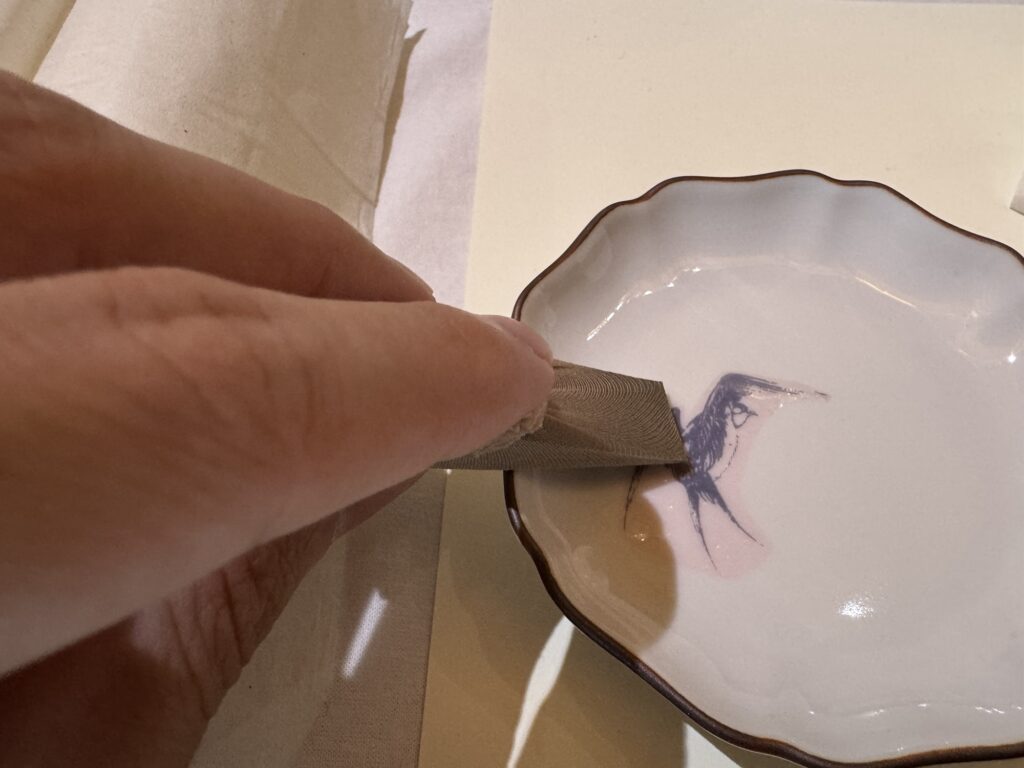
- Apply and press
Place the transfer on the vessel, wipe away the water and press it down to fix it. We placed ours so that the iron spot looked like a mole on the swallow's belly.
- Add more patterns to finish
Add other patterns in the same way and the piece is done. It took about 30 minutes even at a relaxed pace.
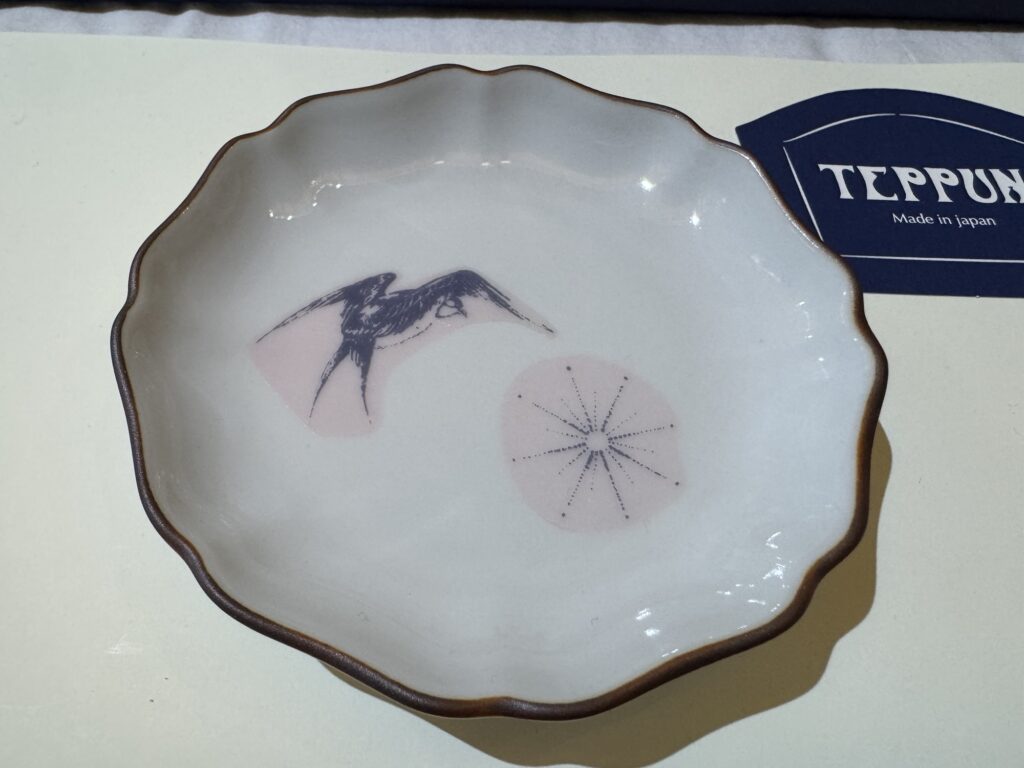
The workshop is open to the general public, and the finished vessel arrives in about a month. The makers say they plan to keep creating opportunities to try it, at KUTANI BASE and elsewhere.
Where to buy TEPPUN.: the online shop and pop-up shops
TEPPUN. has no permanent shop. It is sold directly, only through pop-up shops held at irregular intervals and through its online shop.
| Online shop | Scheduled to open at 10:00 a.m. Japan time on Monday, November 16, 2026 https://teppun.base.shop/ |
|---|---|
| Shipping | Charged separately for online purchases, from 1,000 yen |
| Prices | 2,000 to 10,000 yen (excluding tax), depending on size and shape |
| @teppun.2026 |
We have not confirmed whether the online shop ships outside Japan. Please check the shop page or contact TEPPUN. before ordering from overseas.
All pieces are one of a kind, and the makers note that "because they are made from stocks of rejected pieces, some items may not always be available." At present the two buy the rejected vessels and apply the transfers themselves, so they cannot make large quantities. According to Asai, they are aiming for about 100 pieces a year to begin with and plan to increase the number little by little.
General sales began with the first pop-up shop, held from November 8 to 15, 2026 at CERABO KUTANI in Komatsu. The second pop-up shop is planned for around January 2027. Sales this fiscal year are mainly to individuals, and the makers plan to build up production for restaurants and other businesses and for retailers. They say inquiries about business use are handled individually.
CERABO KUTANI, the venue of the first pop-up
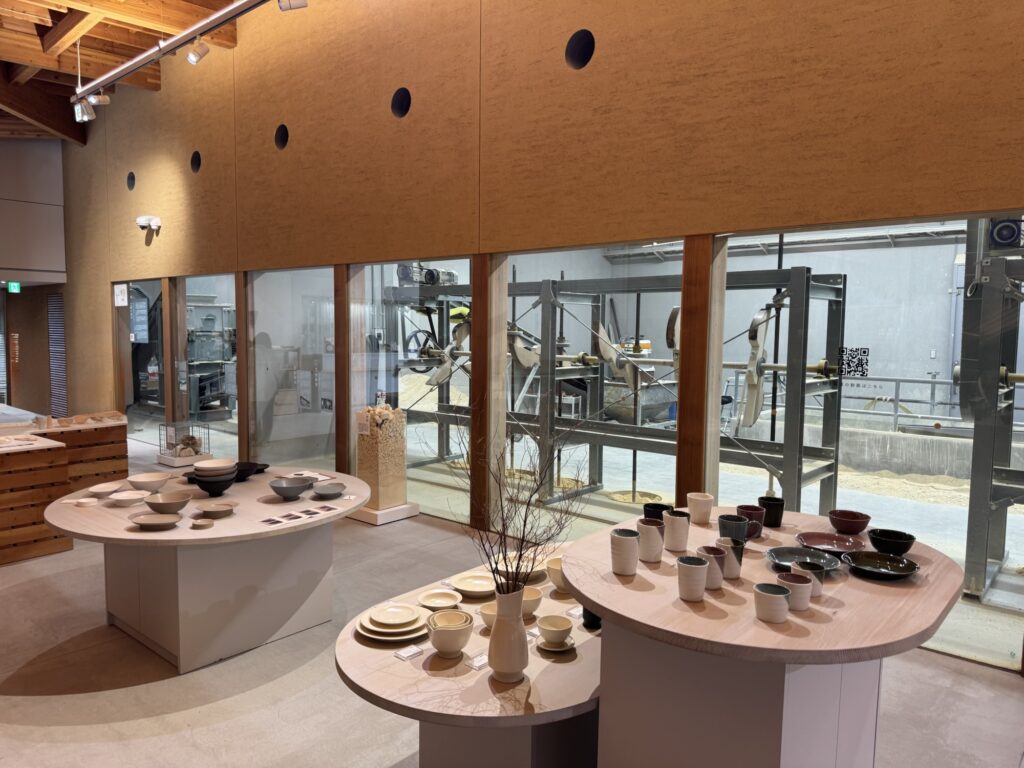
The first pop-up was held at the Kutani Ceramic Laboratory "CERABO KUTANI" in Komatsu, which describes itself as a hands-on Kutani ware facility with a clay factory attached. A factory that crushes Hanasaka pottery stone, the raw material of Kutani ware, into clay operates inside the building, and visitors can watch the process through glass. There is also a permanent exhibition on how Kutani ware is made, and a gallery that shows and sells work by artists and kilns.
Hanasaka pottery stone comes from a deposit found in the Hanasaka district of Komatsu in the late Edo period by the potter Honda Teikichi, and it is still used as the raw stone for Kutani ware today. Admission to CERABO KUTANI has been free since October 2026. It is closed on Tuesdays, Wednesdays and over the New Year holidays; when one of those days is a public holiday it opens and closes on the next weekday instead.
| From | By | Time |
|---|---|---|
| Komatsu Station, east exit | Taxi | About 10 min |
| Komatsu Station | Rental bicycle | About 15 min |
| Komatsu Airport | Taxi | About 17 min |
| Komatsu IC, Hokuriku Expressway | Car | About 15 min |
| Yawata IC, National Route 8 | Car | About 2 min |
The address is A-91 Wakasugi-machi, Komatsu, Ishikawa (石川県小松市若杉町ア91). Komatsu Station is served by the Hokuriku Shinkansen and the IR Ishikawa Railway. Parking next to the building is free.
Photo credits:
Images courtesy of Kintsugi Sekkeishitsu (featured image; plate and cups with the swallow motif; original design drawing; plate and Hanasaka pottery stone)
All other photos by the Wakka Hokuriku editors
